
AI helps pinpoint submerged invasive weeds impacting our aquatic environments
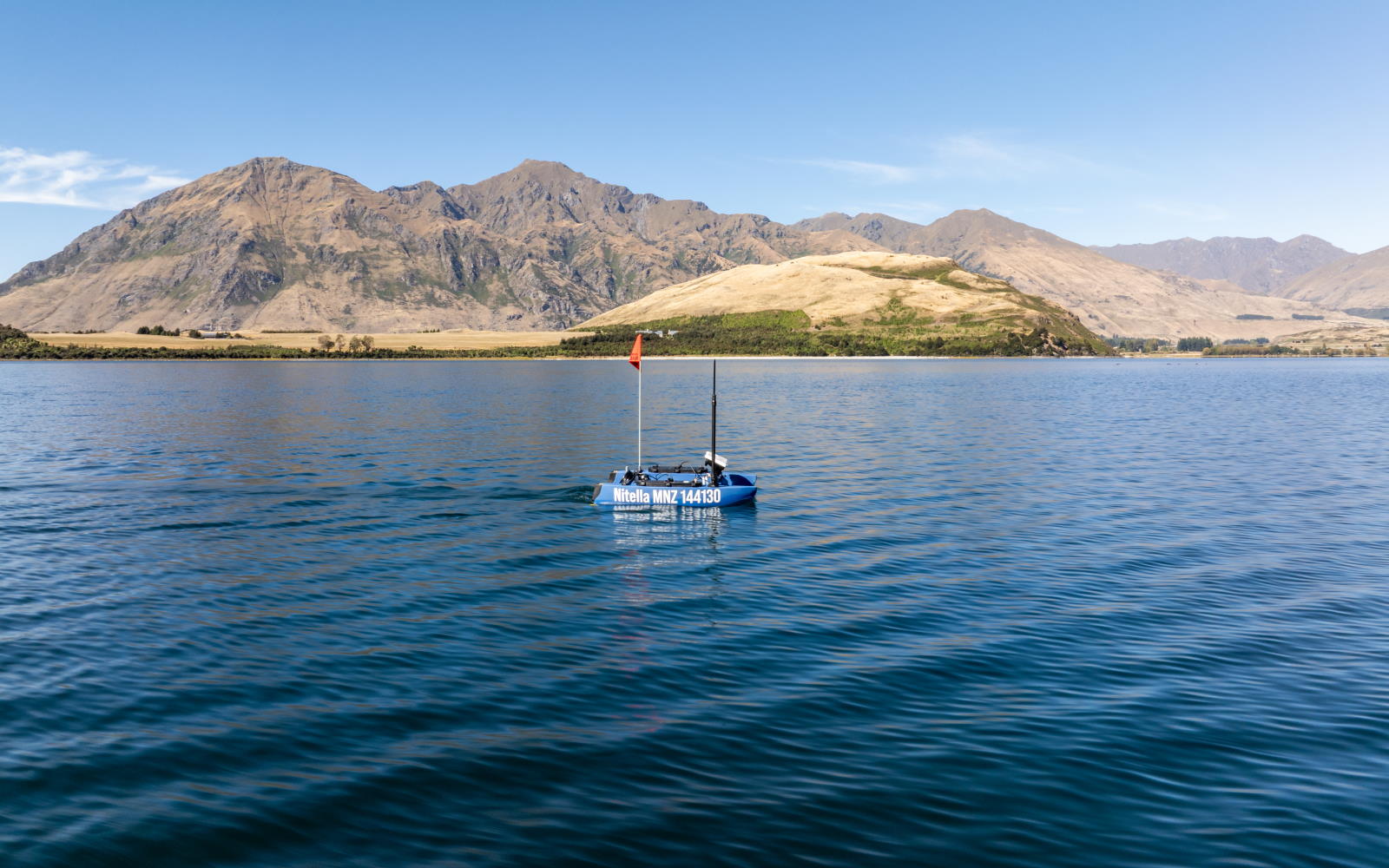
Pest plants can spread quietly through our lakes and rivers, often going unnoticed until they are difficult and expensive to remove. But a new AI tool developed by Earth Sciences New Zealand researchers could help environmental managers get on top of the problem early. They’ve collaborated with partners including the Department of Conservation (DOC), Land Information New Zealand (LINZ), Boffa Miskell and Ngāti Tarāwhai to develop a portable AI detection system that spots target weeds in underwater video and records exactly where they are.
The tool has already been put to the test in Queenstown’s Lake Whakatipu, the Kawarau River, Lake Wānaka (South Island) and Lake Ōkataina (North Island) and has been successful detecting one of New Zealand’s worst freshwater weeds, lagarosiphon (Lagarosiphon major).
The project was led by Earth Sciences NZ researcher Dr Daniel Clements, who says detecting submerged weeds in an early stage of invasion has been a challenge for environmental managers who are tasked with protecting our aquatic resources.
“Traditional surveillance often relies on divers searching extensive areas of the underwater environment, which can be time-consuming, costly and limited in the area that can be covered.”
That’s why AI-powered and autonomous approaches may provide significant long-term efficiency gains.
“Finding invasive weeds in an early stage of invasion can make a real difference to achieving cost-effective management. By combining underwater video with AI, we can identify infestations and map their locations, helping environmental managers focus their efforts where they are needed most.”
Clements says collaborators see the potential of the technology. They have provided technical input and early-stage development funding. The project has worked with Ngāti Tarāwhai Iwi Trust, who have enabled the technology development to date by supporting trial deployments at Lake Ōkataina.
Cutting-edge tech to save time and resources
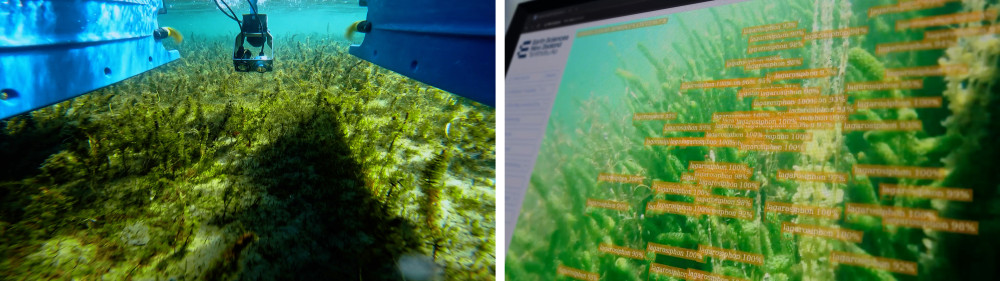
The system combines underwater cameras, machine learning and a portable detector module to identify invasive weeds in live-streamed video. The AI software is trained to recognise the target species, analysing video frames as the camera moves through the water column.
Each detection records the GPS location, time and number of instances in the frame. These records can be displayed in mapping applications such as ArcGIS, enabling environmental managers to direct management efforts to specific locations. Divers could then focus on management interventions rather than “looking for the needle in the haystack.”
Managing aquatic invasive species that threaten our waterways
The technology has initially focused on two of New Zealand’s most problematic invasive freshwater plant species: lagarosiphon (Lagarosiphon major) and hornwort (Ceratophyllum demersum).
DOC Freshwater Technical Advisor Phoenix Hale says they were eager to target these species because of their economic, social and environmental impact.
“Both weeds form dense underwater growths that can reach the surface, smothering native plants that fish and invertebrates rely on. They spread when fragments are carried on boats, trailers and fishing gear, making them difficult to eradicate, but finding them early gives us the best chance to act.”
Seeking partners to scale up this technology
Clements’s goal is to partner with organisations interested in using the technology to refine it and make sure it is fit-for-purpose and deployable at large scale in the field. This is what is urgently required to protect our freshwater environments.
“We can see the potential, but there’s more we need to do to take this innovation from its current prototype to large-scale field use. We want to partner with prospective users so we can get the system into action.”
Clements welcomes enquiries from interested parties.