
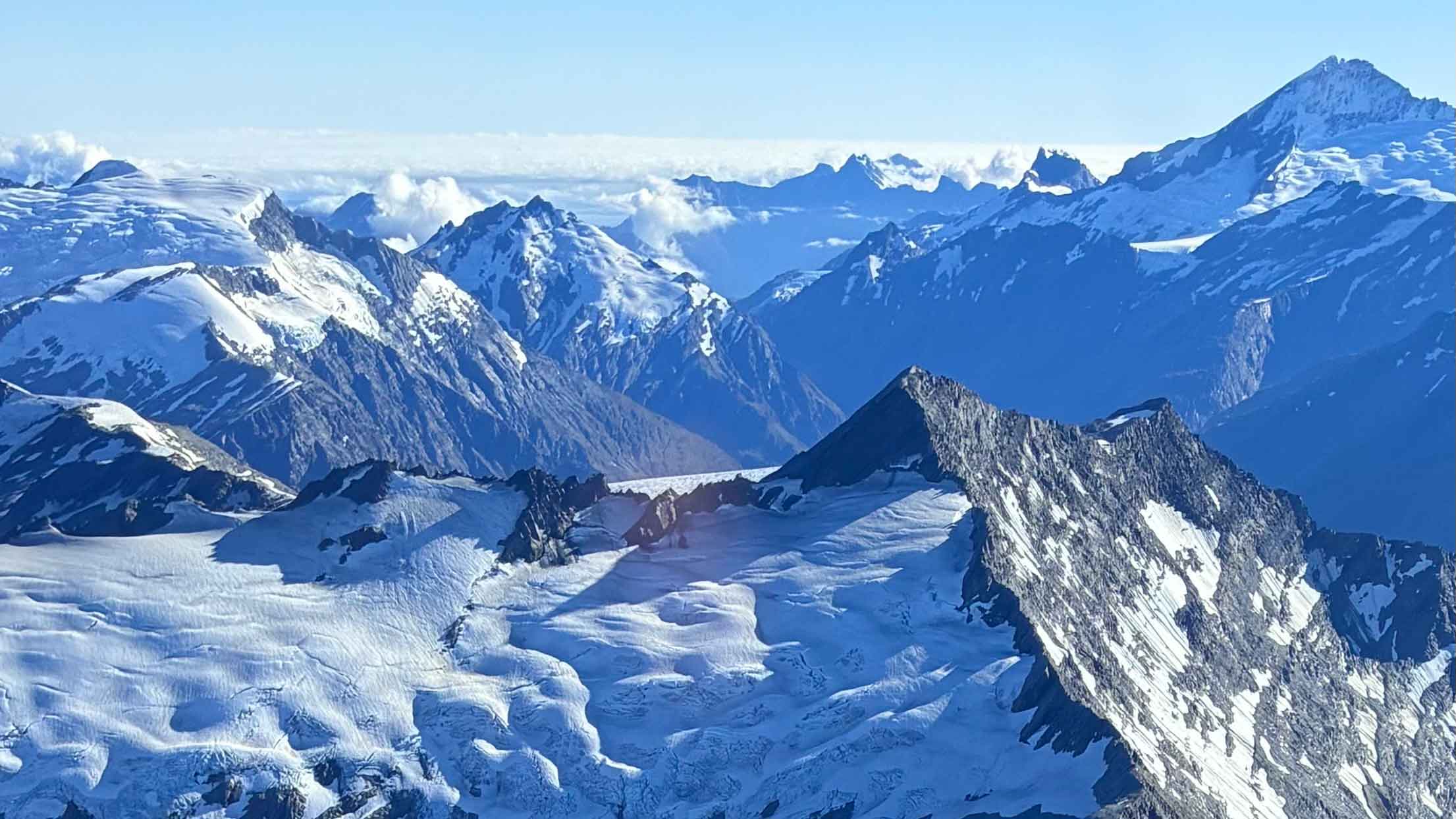
Researchers carrying out this year’s end-of-summer snowline and glacier survey saw retained snow on some glaciers, but no reversal in the overall trend of ice loss.
“This year’s survey showed some glaciers with snow and ice footprints that weren’t quite as small as what we’ve seen in the past two years. But it’s only a stay of execution and not a reversal in the long-term decline of ice coverage here,” says Earth Sciences NZ Principal Climate Scientist, Dr Andrew Lorrey.
The annual survey began 1977 and is undertaken each March after the end of summer. Earth Sciences NZ researchers team up with scientists from Victoria University of Wellington and the Department of Conservation to take thousands of photos from a light aircraft.
These aerial photos reveal changes in the terminus and snowline position for each glacier compared with previous years. Some of the photos are used to build 3D models that track ice volume changes. Together the results reveal how much of the previous winter’s snow remains to contribute to long-term glacial ice retention.
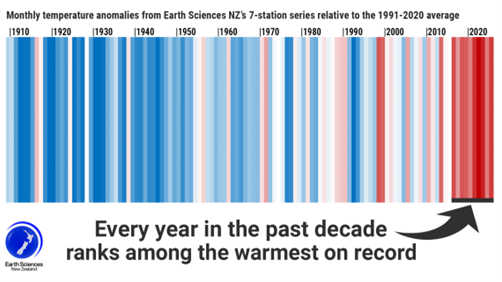
In Aotearoa, 2025 was the fourth warmest year on record. While this ranked lower than some recent years, every year in the past decade was among the warmest. Globally, the World Meteorological Organization said that 2025 was 1.43 °C above the pre-industrial baseline. A warmer planet means less ice – and our glaciers are one of the more visible signs of a warming climate.
“Glaciers are an important part of New Zealand’s environment, economy and identity – they underpin tourism, deliver meltwater carrying nutrients into rivers and lakes, and feed the hydroelectric lakes that power much of our renewable electricity,” says Dr Lorrey.
“Years like this are few and far between, and when they happen it isn’t enough to reverse the damage that’s been done in the years prior. To limit the continued trend of glacier decline, climate warming needs to be halted quickly.”
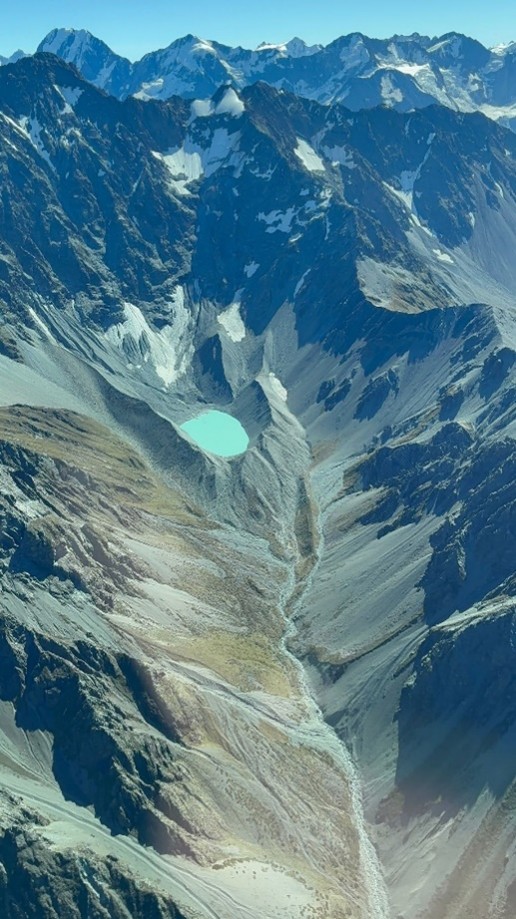
Glacial lake surrounded by a moraine below Mt Ronald Adair, Canterbury, New Zealand